Do you love classic sea heroes, epic tales, square-rigged ships, and (Ant)arctic hardships? Do you dream of embarking on such a sailing trip yourself one day, but are currently stuck at home? Then these are the stories you need to read in the coming weeks. Sail around the world from your armchair, without having to worry about icebergs, doldrums, or mutiny! (You can find Part 1 about modern heroes here.)
5 tips from our onboard library
 Mutiny on the Bounty – Charles Nordhoff and James Norman Hall
“It is hard to imagine another authentic sea adventure novel that appeals to us so much with its heroic premise as Mutiny on the Bounty.”
The famous story of Captain William Bligh, who is cast adrift in the Pacific Ocean by mutineer Fletcher Christian, indeed breathes heroism from beginning to end. Bligh attempts, with 18 of his crew members, to row a longboat to the island of Timor, while Christian takes command of the ‘Bounty’. From that moment on, the men and the ship are outlaws and will have to seek cover or wander for the rest of their lives.
“It had grown quiet on board, and the men stood at the rail watching Bligh’s boat grow smaller and smaller. Christian still stood by the cabin door. […] It had been around eight o’clock when the launch [longboat] was put out; the breeze grew stronger, and the ‘Bounty’ surged through the water, leaving a faint streak of foam behind her hull. The launch was now a speck and disappeared within half an hour, as if the sea had swallowed it.”
 South – Sir Ernest Shackleton
In the year I myself sailed to Antarctica on a square-rigged three-master (the bark Europa), I read this account of Shackleton’s unimaginably arduous expedition, which took place almost a hundred years earlier (1914-1917). Despite all setbacks and challenges, Shackleton consistently manages to uplift his crew and encourage them to perform at their best. Even when their tents are blown away, exhaustion is near, and they are lashed by one snowstorm after another, he keeps a cool head and demonstrates unparalleled leadership.
“At last the light began to break, and at the same time the weather cleared and the wind died down to a south-westerly breeze. A glorious sunrise heralded, we hoped, the last day we would have to spend in the boats. […] As soon as it was light enough, we chipped and scraped the ice from the bow and stern. […] We put out our ice anchor and brought the oars on board. During the night they had grown as thick as telegraph poles in the rising and falling of the freezing sea.”
 Overwintering on Nova Zembla, Willem Barentsz and the Expedition to the North – Rayner Unwin
This is about the voyage of Willem Barentsz and Jacob van Heemskerk, during which they failed to reach China but discovered the Spitsbergen archipelago and spent months in the cold on Nova Zembla. The return journey in small boats, in particular, is a true heroic feat. The book is, of course, largely based on Gerrit de Veer’s notes from 1596.
I first read the book South, about Shackleton’s expedition to the South Pole, which takes place in the early 20th century. The differences in knowledge regarding navigation, technology, and health (vitamin C) are all the more striking. By the way, don’t be tempted to watch the 2011 film of the same name, full of nautical and geographical inaccuracies and a lot of romantic nonsense (sorry). Just read this legendary book!
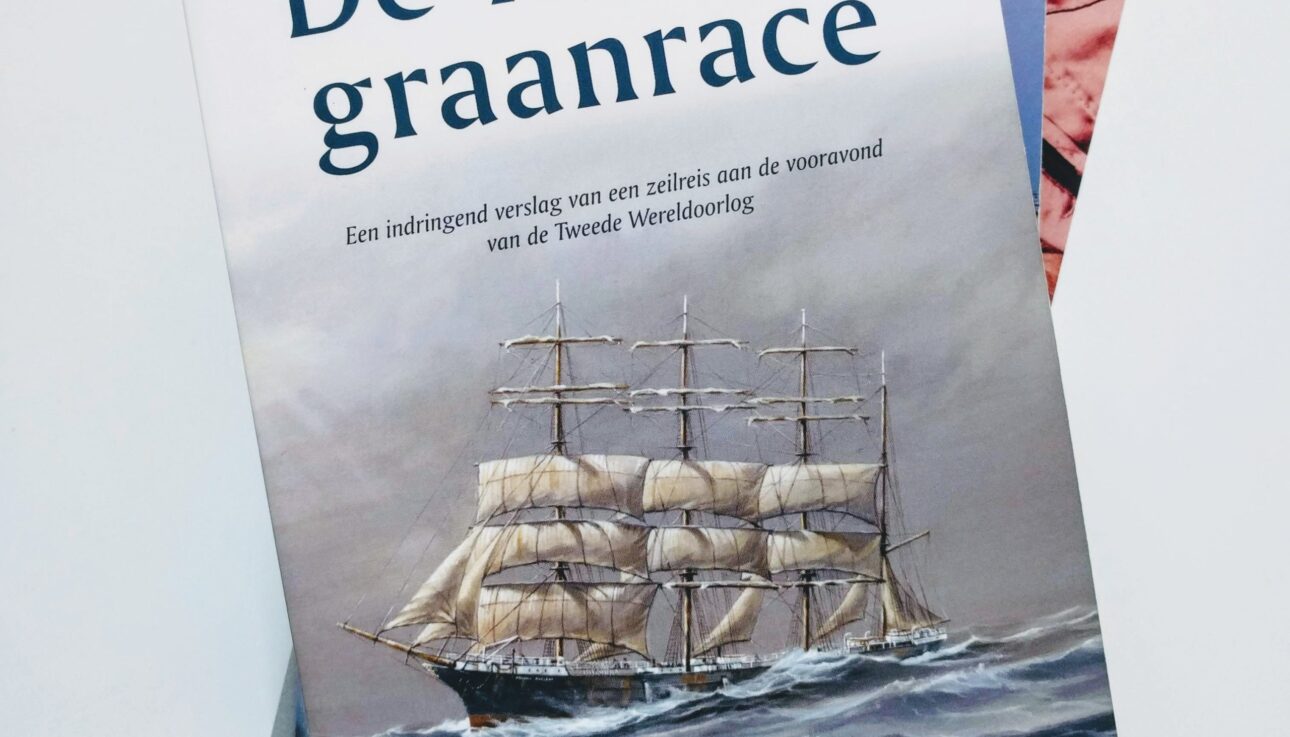
 The Last Grain Race – Eric Newby
It is almost inconceivable that a story like this would still be unfolding in the late 1930s. The work aboard the four-masted ‘Moshulu’ is grueling, the food poor. The commands on deck are in Swedish – “Klart att vända!” [Ready to tack!] – even though a large part of the crew initially doesn’t speak the language. But the officers are ruthless, and you learn quickly. An intriguing and at times oppressive account of life aboard one of the last sailing cargo ships.
“As we climbed the ladder to the deck, we heard the signal ‘två vissel’. We saw the enormous foresail flapping and rattling in a wind that increased in strength by the second, blowing the sails against the masts. […] ‘Förbrassar’, Tria commanded. He threw the braces off the pins, and we went to the winches. Just at that moment, one of the drums gave way, after thirty-four years of poor maintenance and careless use. The entire mechanism seized up.”
 Moby Dick – Herman Melville
Not a true story, but heroic and a classic ‘par excellence’, partly based on Herman Melville’s own experiences as a whaler and on stories known at the time about a white sperm whale. It tells of Captain Ahab’s obsession and vengefulness, and the inexperienced sailor Ishmael who ‘let himself […] be carried away by the events’.
“The temporary fear, as vague as it was immense, was greatly intensified by the contrast with the peaceful weather, in which, according to some, a devilish enchantment lurked beneath all the blue loveliness, and for days and days we sailed through a sea so languid and desolate and still that all water seemed to become lifeless out of aversion to our vengeful plan as soon as it touched the death-urn of our bow.”
In 2015, the film ‘In the Heart of the Sea’ was released, for which the book Moby Dick and the sinking of the whaling ship ‘Essex’ served as inspiration. Now available on Netflix, among others.
P.S.: Most books can be ordered from your local bookstore or antiquarian and delivered right to your home.