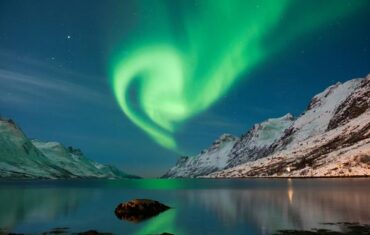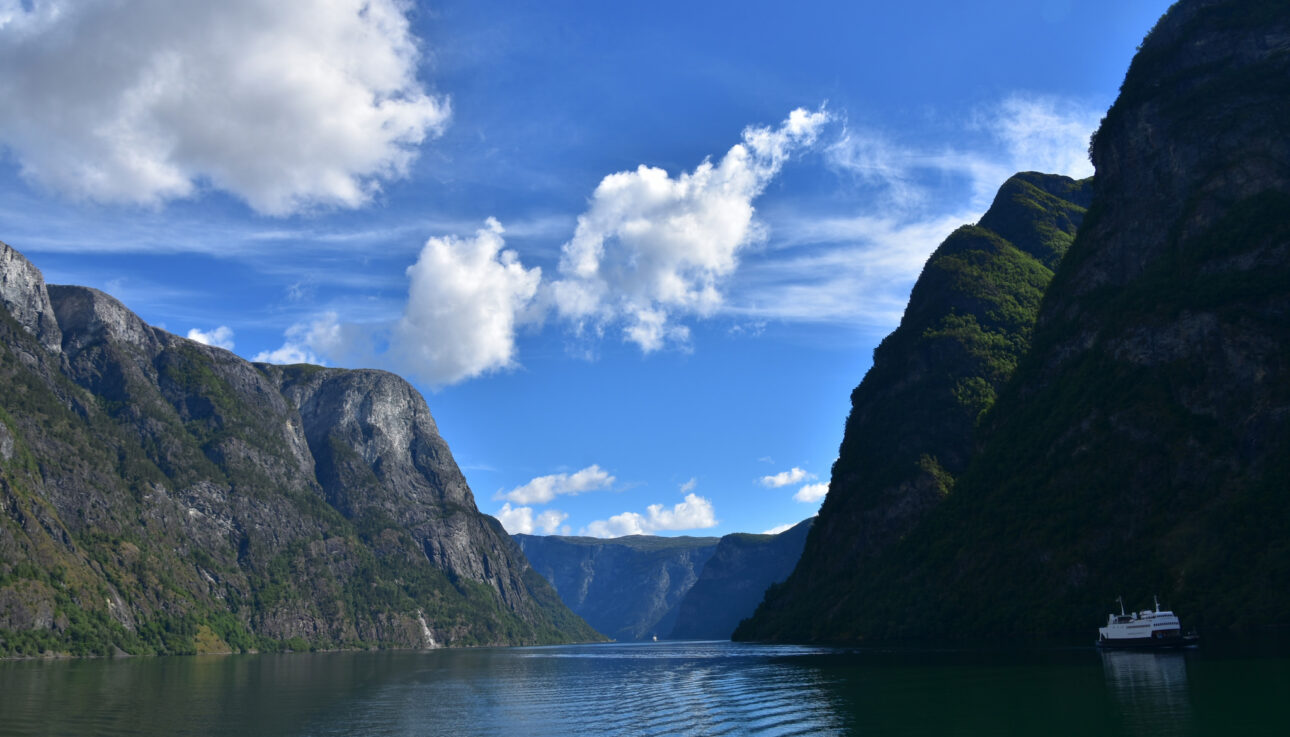
Norway is known for its immense fjords: they are high, deep, and breathtaking. Is exploring the Norwegian fjords on your bucket list? We’ve gathered some interesting fjord facts for you:
1. There are (no less than) 120 of them.
And they stretch from 58 degrees North Latitude to above 71 degrees North Latitude.
2. The fjords were formed during the Ice Age
For millions of years, ice scraped across the Norwegian land. Pushing and (re)ceding, the glaciers carved out deep fjords. The longest fjord extends 124 miles (200 km) inland, the highest rock face rises 4,593 feet (1,400 meters) above the water, and the deepest continues 1,640 feet (500 meters) underwater.
3. They spring back like a sponge
When the Ice Age ended and temperatures rose, the ice masses covering the land melted. With the disappearance of the ice, the land was also relieved of the enormous weight of the glaciers. The rocks ‘sprang back’ like a sponge that was no longer compressed. Norway still rises slightly higher each year.
4. They form Europe’s longest coastline
Thanks to all those inlets, Norway has the longest coastline in Europe: 15,626 miles (25,148 km). That’s quite a bike ride.
5. There’s no ice in the fjords – even in winter (but there are many animals)
Thanks to the warm Gulf Stream that flows north along the Norwegian coast from Mexico, the fjords and the waters around the Lofoten and Vesterålen islands are ice-free, even in winter (with a few exceptions high in the north). The relatively mild climate attracts many animals. Seals, porpoises, and various fish species swim in the fjords. You might encounter whales and orcas. And in the air, eagles, puffins, and other birds can be seen.
6. You’ll find a unique coral reef there
Almost everyone knows the beautiful (and fragile) Great Barrier Reef. But a unique coral reef also lies much closer to home: along the entire Norwegian fjord coast, at depths of 130 to 3,280 feet (40 to 1,000 meters). This cold-water coral reef consists of about ten coral species. Make sure to wear a good wetsuit if you go snorkeling here.
7. They are more beautiful than the Galapagos, Grand Canyon, and Machu Picchu
We haven’t (yet) been able to compare them ourselves, but UNESCO did, and this is what they said:
“The natural beauty is due to the narrow and steep rock walls that rise up to 4,593 feet (1,400 meters) above the Norwegian Sea and extend 1,640 feet (500 meters) below the water surface. The steep walls of the fjords feature numerous waterfalls, while rivers flow through deciduous and coniferous forests to glacial lakes, glaciers, and rugged mountains.”
Experts from National Geographic also weighed in on the designation of the most important World Heritage sites. In 2006, the Norwegian fjords were declared the winner. And which magnificent places had to concede defeat? Well, the Galapagos Islands, the pyramids of Egypt, the Grand Canyon, Angkor Wat, and Machu Picchu.
Will you join us to discover the fjords of Norway?

For example, during our Sail & Hike Expedition | Legendary Senja

Or would you prefer to come aboard for our Sailing Expedition with Whale Safari?
(main photo credits: Edwald Sphere)