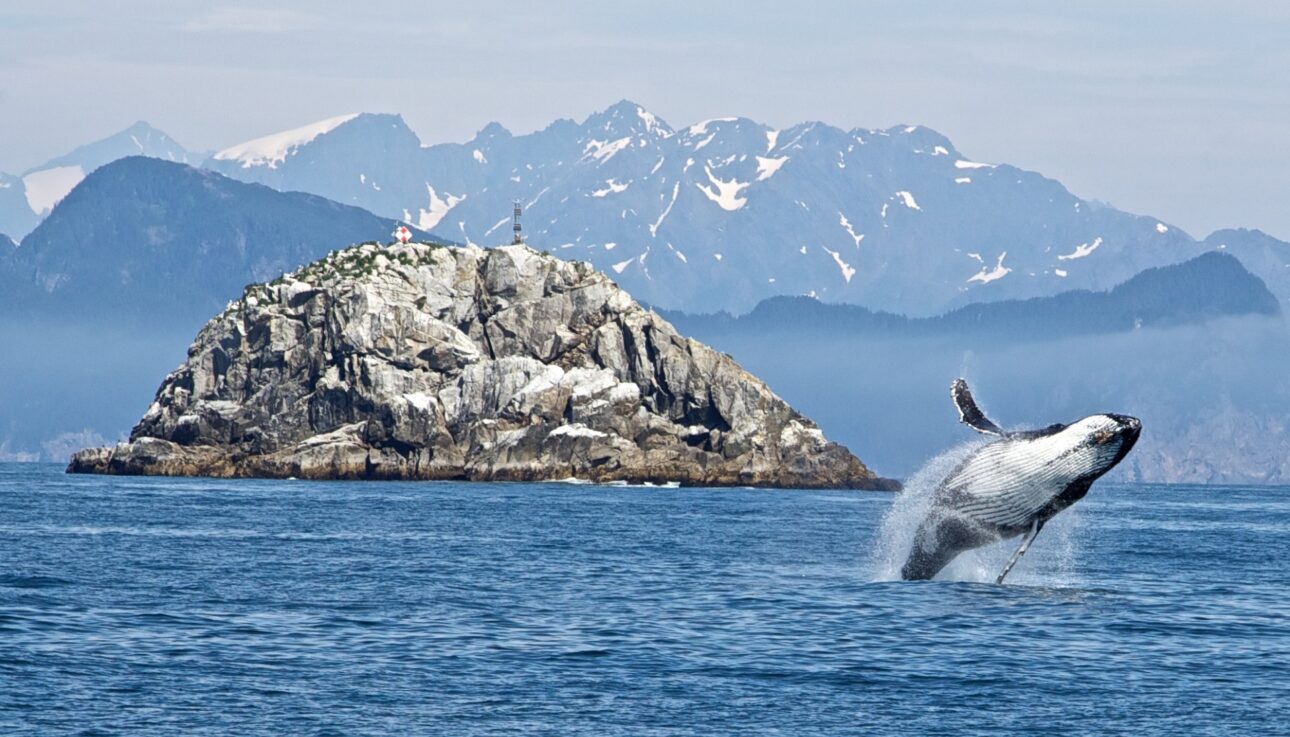
Whale watching during a sailing trip is one of the most extraordinary experiences you can have. Near Andenes, in Vesterålen, the seabed rises rapidly, creating an abundance of food that attracts these animals. Here are a few facts about these impressive marine mammals.
1 From Land to Sea
Whales are warm-blooded mammals, have lungs to breathe air, and give birth to live young. The first cetaceans lived near river mouths, gradually ventured further into the sea, and eventually evolved into the whales we know today.
2 Toothed Whales
There are two types of whales: toothed whales and baleen whales. One of the most well-known species of toothed whales is the orca. They are true hunters. They use their teeth to catch their prey. They live in pods and help each other hunt and care for their young.

3 Baleen Whales
Humpback whales are baleen whales. They don’t have teeth but use baleen plates to gather food. Baleen plates are flexible, comb-like structures that hang from the whale’s upper jaw. Whales take a large gulp of seawater and filter out the food as they push the water through the baleen. We usually encountered humpbacks in small groups of about 3-4 individuals.
4 Echolocation
Toothed whales find their prey using echolocation. They emit sound waves and register how long it takes for the echo to return. The faster they pick up the echo, the closer the prey is.
5 Communication
Whales don’t have external ears. They perceive sounds with their entire body. This is why underwater explosions can cause significant damage to whales. Sounds are transmitted through the body to the auditory organ located behind the jaws. Baleen whales produce long, low-frequency sounds to communicate with each other. Toothed whales—including dolphins—make short whistle and click tones.

6 Record Depth
The sperm whale can dive to an astonishing depth of 3 kilometers (nearly 2 miles). This is the deepest dive of any ocean-dwelling mammal. This toothed whale can stay underwater for 2 hours and also has an impressive amount of blood in its body: 3000 liters (about 790 gallons). A few years ago, we encountered a sleeping sperm whale in the early morning on the ocean. Fortunately, we weren’t sleeping and carefully sailed around it.
7 Record Speed
The orca is the fastest swimmer among all cetaceans. It can reach a top speed of 56 kilometers per hour (about 35 mph). However, it usually doesn’t swim that fast, typically around 10 to 13 kilometers per hour (6-8 mph). On that same ocean trip, shortly after we encountered the sleeping sperm whale, we were visited by four orcas. Extremely curious, they swam around the ship for a while. They were curious about what that shiny, rotating thing was (the propeller).
Will you join us in search of whales in the high north?