Norway
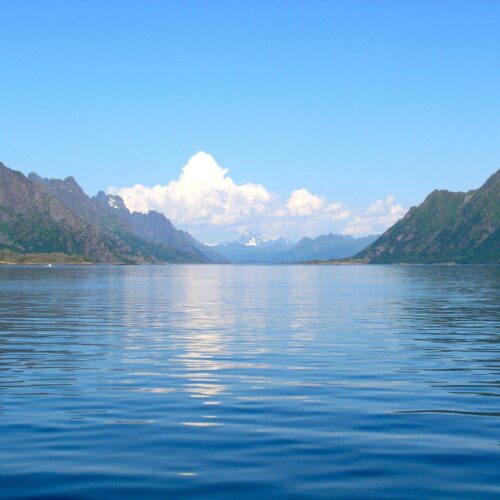
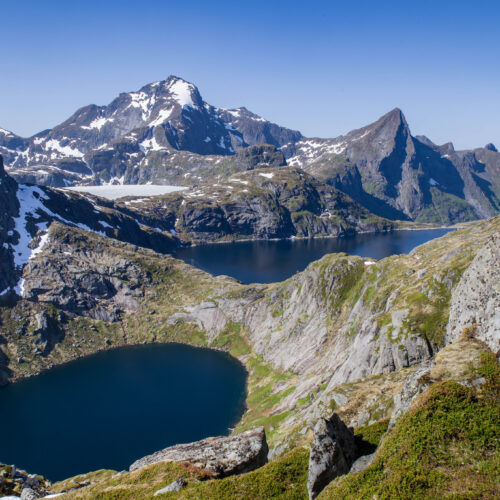
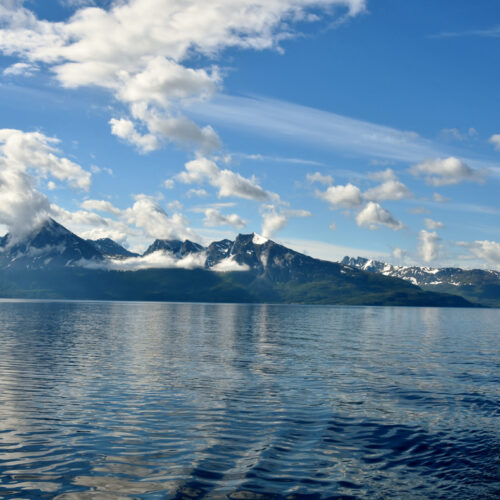
Norway is the land of fjords, mountains, Vikings, and the northern lights. The rugged, elongated coastline offers plenty of variety for a multi-day exploration of picturesque fishing villages, deserted bays, and snow-capped mountain ridges. Are you coming along? Below, we’ll tell you more about the country, the climate, the best time to travel, and the wildlife you can encounter in Norway.
Location
Norway stretches from 58º N to 71º N (the North Cape). The country has an area of approx. 125,000 sq mi. From north to south, it is 1,050 miles long, while it is only 280 miles wide. Together with Sweden and Finnish Lapland, Norway forms the Scandinavian Peninsula. The west coast borders the Norwegian Sea, which is part of the Atlantic Ocean. Thanks to all the fjords, Norway has a coastline of over 15,500 miles, the longest in Europe.
You can find more fascinating facts about Norway’s fjords here >
Climate of Norway
Thanks to the Gulf Stream, the climate in Norway is much less ‘arctic’ than, for example, in Greenland or Alaska, which are at the same latitude. The relatively warm seawater ensures that the fjords remain (partially) navigable even in winter. In summer, in the far north in Finnmark, it can even reach 86 degrees on a sunny day. But don’t be surprised if it’s no warmer than 45 degrees a day later.
Partly because the country is so vast and has high mountain ranges, there are large differences between the north and south of Norway, and between the coast and the areas further inland. The country officially has five different climates. In addition to a temperate maritime climate and a temperate continental climate, these include a tundra climate, a continental climate, and a high mountain climate.
The coastal areas have relatively mild winters, but also snowfall. In the interior, it is colder and more snow falls. In summer, it is warm and dry there, while the climate along the west coast is (also) temperate then.
Weather, sunshine hours, and precipitation
The weather in Norway can be fickle, meaning you sometimes experience multiple ‘seasons’ in one day. Although the country has a reputation for frequent rain, that is certainly not our experience. In the lower-lying areas on the west coast, more precipitation falls on average over a year than in the Netherlands, but that falls mainly in the autumn, and the further north you go, the less chance of rain. The Troms region (where we make most of our sailing trips) is even considered a ‘dry’ spot in Norway.
In the spring, the average daytime temperature is between 46 and 59 degrees, while it cools down to 32 to 41 degrees at night. In the summer, the daytime temperature fluctuates around 68 degrees, and around 50 degrees at night. When autumn sets in, it quickly becomes cooler, with daily averages of 46 to 55 degrees and nights of 39 to at most 45 degrees. In the period from November through March, daytime temperatures are close to freezing. At night, there is light or mild frost (19 to 28 degrees).
The number of sunshine hours per day ranges from 7 to 8 in the summer months to 1 to 2 in the winter. Above the Arctic Circle, the midnight sun shines in the summer, so you can still fully enjoy the sun even at 11 PM. In the winter, the sun no longer rises above the horizon here, and the Tromsø region is immersed in the polar night from late November to mid-January.
Best time to travel to Norway
The best time to travel to Norway depends largely on your wishes. Do you like (temperate) warmth or are you a snow lover? Do you want to visit towns or spot wildlife? And what activities do you want to undertake (museums, hiking)?
Most people head to Norway in the spring or summer, roughly between late May and late September. This is also the time when all museums open their doors and most festivals are organized. July and August are the most summer-like in terms of temperature, but you will also encounter more people than, for example, in May or early June, when it is a lot cooler and still very spring-like. In September and October, you can enjoy the autumn colors and it is often quieter, but also keep in mind a bit more precipitation than in the summer.
Do you want to experience the polar night, see the northern lights, or go on a dog sledding tour? Then you should preferably travel to the far north, for example the Tromsø region, in the winter months. Prepare for snow-covered mountains and roads, and of course short days. By the way, you can already observe the northern lights from early October, although you always need a bit of luck for that.
Curious about how the northern lights are formed? Read more here >
Wildlife in Norway
According to Lonely Planet, Norway is “the last refuge for some of the most intriguing wildlife.” Curious which ones they are?
In northwestern Norway, along the islands of the Vesterålen, the orca goes in search of food. The seabed of the miles-deep Atlantic Ocean rises rapidly here toward the continental shelf. This creates strong water currents in which plenty of food can be found for these apex predators of the ocean.
Besides orcas, there is also a good chance of encountering humpback whales around the Vesterålen and in Finnmark. These enormous whales weigh about 30 tons each and work perfectly together to frustrate and devour schools of herring. An impressive sight.
Slightly less exciting than the orcas and humpbacks is the skrei. Skrei means ‘wanderer’ in Norwegian, and that is exactly what this type of cod does. They wander the Barents Sea and return by the millions to the Norwegian coast in the period from January to March. The waters around the Lofoten turn out to be perfectly suited for the skrei to spawn, to the delight of the fishermen living on the islands.
The largest bird you will find in Norway is the white-tailed eagle. It has a wingspan of over 6.5 feet and is not called a ‘flying door’ for nothing. Not only its gigantic dimensions, but also its white head and hooked beak make you prefer to stay away from this bird of prey. But how fascinating it is to see it flying high above the fjords!
The colors and posture of puffins are reminiscent of penguins. They are just much smaller and make less noise. Unlike penguins, puffins can fly, but they prefer to dive down while their wings serve as propellers. They can reach speeds of up to 53 mph. You can recognize puffins by their bright orange, curved beak and the characteristic white circle around their eyes.