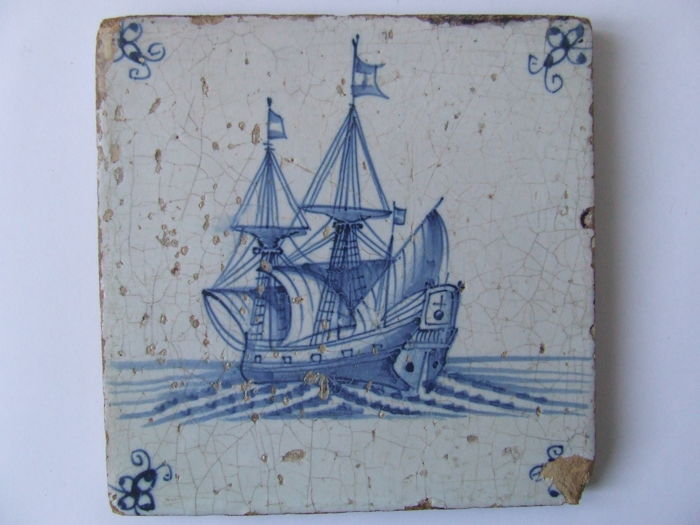
Anyone who paid even a little attention to their high school history teacher knows that the Netherlands is a seafaring nation par excellence. Thanks to trade, we traveled all over the world.
Dutch seafarers discovered new territories and named them places like Cape Horn (after the city of Hoorn), Cape of Good Hope, Waygats (on Novaya Zemlya), and Spitsbergen (the largest island of Svalbard, named by Willem Barentsz).
These sailors not only had a major impact on the world map but also on our language. You often don’t notice it on a regular workday, but once you step aboard a ship, you’ll encounter one expression after another that turns out to have its origins in seafaring. We’ve collected a few great ones for you.
opschieten – neatly coiling the ropes on the pin so they don’t get tangled during the next maneuver, which often needs to be done quickly
slampamper – an easy-to-open or remove connection that holds the anchor chain to the ship. If something goes wrong, you break the ‘slampamper’ to detach from the anchor.
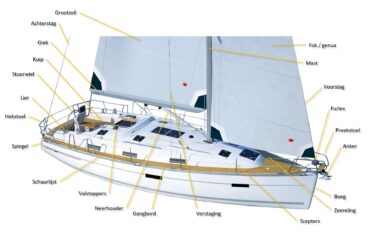
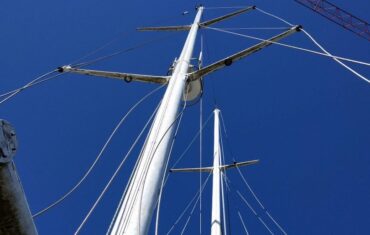
lummel – the connection of the boom (horizontal) to the mast (vertical)
opdoeken – neatly folding the sails (the canvas) after they have been lowered
opkalefateren – originally, to make a (wooden) ship watertight again; later, also to get it ready for the next voyage
opdirken – hoisting the boom with a line (the ‘dirk’) or raising flags on the ‘dirk’ during festivities in the harbor
poolshoogte nemen – measuring the height of the North Star with a sextant to determine the ship’s position. If you measure the North Star at an angle of 54˚, you are at 54˚N latitude (at the latitude of the Netherlands)
de spuigaten uitlopen – scuppers are holes at the bottom of the bulwark (railing) through which water can drain from the deck, especially with high waves when water washes over the bow
toetakelen – equipping the ship with lines, blocks, and rigging to prepare it for a voyage after launching
bakzeil halen – a sail is ‘bak’ (backed) when the wind hits it from the front (the wrong side), causing the ship to stop or be forced in another direction.
Want more tips and travel inspiration? Subscribe to our magazine and immediately receive the free booklet 12 Must-Have Tips for Your Unforgettable Trip.